PRP and ACP therapy
in Berlin
Regenerative joint and tendon therapy using the body's own healing mechanisms
Chronic joint pain, tendon irritation and sports injuries are increasingly treated today with regenerative procedures instead of exclusively with medication or surgery. Modern orthopedics utilizes the body’s own healing mechanisms to reduce inflammation and promote tissue regeneration.
A key procedure is PRP therapy (platelet-rich plasma) : Growth factors are extracted from the patient’s own blood and injected directly into the affected tissue. A standardized further development of this is ACP therapy (autologous conditioned plasma) – a particularly pure and well-tolerated plasma concentrate.
One innovative approach is PRP therapy (platelet-rich plasma), in which growth factors from the patient’s own blood are used in a targeted manner. A frequently used variant of this is ACP therapy (autologous conditioned plasma), which is particularly pure and well-tolerated.
What is PRP?
Platelet-rich plasma (PRP) is platelet-rich blood plasma obtained by processing the patient’s own blood. The platelets (thrombocytes) contained within are rich in growth factors that play a central role in natural wound healing and tissue regeneration.
The growth factors in PRP act in three ways:
- They promote blood circulation in the treated tissue.
- They stimulate cell regeneration
- They have an anti-inflammatory effect.
This makes PRP particularly suitable for degenerative joint diseases, tendon irritations and sports-related injuries.
Advantages of PRP therapy
- Autologous material: Since PRP is obtained from the body’s own blood, allergic reactions are not to be expected.
- Minimally invasive: Outpatient procedure without surgery
- Short treatment duration: Usually under 30 minutes
- Pain reduction: Improvement of pain and mobility
- Supports healing: Effective for chronic conditions and sports injuries
- No foreign substances: No artificial additives or medications necessary.
What is ACP?
ACP (Autologous Conditioned Plasma) is a standardized special form of PRP therapy. Through a defined processing procedure, the plasma is additionally “conditioned”: Undesirable components are removed, resulting in a particularly pure, highly concentrated plasma.
ACP is characterized by very good tolerability and is frequently used in orthopedics for the following indications:
- Osteoarthritis
- Cartilage damage
- Tendon irritation
The procedure is well-researched scientifically and has become established in both sports orthopedics and conservative pain therapy.
Advantages of ACP therapy
- Standardized processing: Ensures consistently high efficacy
- Very good tolerability: Because the body’s own material is used.
- Outpatient, fast treatment: No hospital stay necessary.
- Suitable for osteoarthritis and tendon disorders: Especially for degenerative joint problems
- Personalized treatment intervals: Adaptation to the individual course of the disease.
Für Sportler besonders geeignet
Physical activity is healthy, but carries a risk of injury: In Germany, around 1.5 million people suffer a sports injury every year. The most commonly affected areas are joints, muscles, ligaments and tendons – especially the ankle, knee, shoulder and elbow.
Typical causes of sports injuries:
- Abrupt movements
- overload
- Falls
- Incorrect loading
Typical complaints after sports injuries:
- Swelling and pain in the affected area
- Limited mobility
- Feeling of instability in the joint
- Loss of function of muscles or tendons
ACP therapy can have a supportive effect in sports injuries: It inhibits inflammatory processes, accelerates healing and contributes to the restoration of mobility.


Procedure of treatment with autologous blood
Treatment procedure
1. Individual diagnostics
The process begins with a thorough examination and consultation. This will determine whether PRP or ACP is suitable for your symptoms.
2. Blood draw
A small amount of blood is taken from a vein in the arm – similar to a laboratory test.
3. Aufbereitung
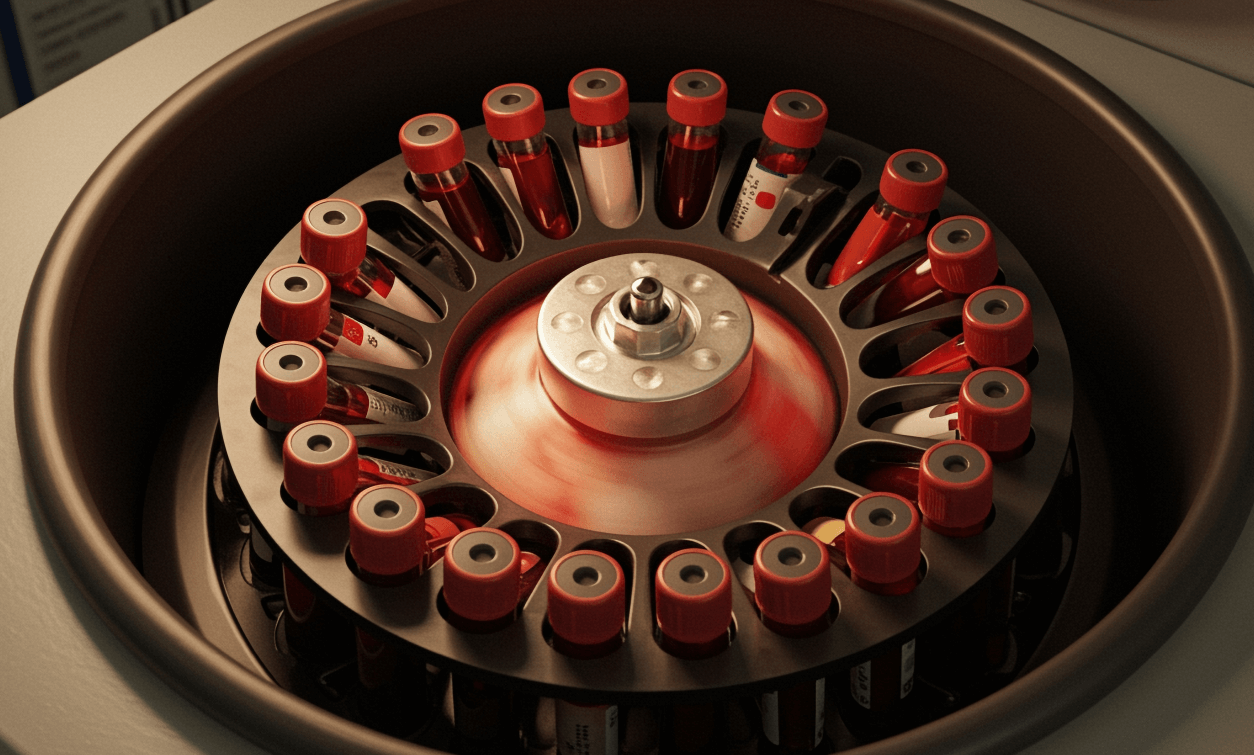
The blood is processed in a special centrifuge for approximately 5 minutes. During this process, the platelet-rich plasma is separated from the rest of the blood and concentrated.
4. Injection into the affected area
The processed plasma is injected directly into the affected joint, tendon tissue, or muscle area. No additives or foreign substances are used.
5. Follow-up treatment
You will usually be mobile again immediately after the injection. Light physical activity is permitted, but strenuous activity should be avoided for a few days.
Duration : under 30 minutes
Frequency : 3 to 5 treatments at intervals of approximately 1 week.
Areas of application for autologous blood therapy (PRP and ACP)
Applications of PRP and ACP
- Osteoarthritis (e.g., knee, hip, shoulder, ankle)
- Cartilage damage in early and middle stages
- Chronic tendon irritations (e.g., tennis elbow, Achilles tendon)
- Sports injuries to muscles, tendons or ligaments
- Back pain and muscular irritation
- Postoperative support for healing
Especially in the early stages of osteoarthritis, PRP or ACP therapy can help to slow down the progression and postpone surgery.
Advantages and risks of PRP/ACP therapy
Benefits and risks of PRP and ACP therapy
Advantages of PRP and ACP therapy
Natural healing process
Since the patient’s own blood is used, there is no risk of allergic reactions or intolerances.
Improved regeneration
The concentrated platelets promote cell regeneration, reduce inflammation and accelerate the healing process.
Few side effects
The treatment is minimally invasive and generally well tolerated.
Outpatient procedure
The therapy can be performed without hospitalization and usually only takes a few minutes.
Wide range of applications
Particularly effective for tendon irritation, osteoarthritis, sports injuries and as support after surgery.
Pain relief
Many patients report a significant reduction in pain and improved mobility.
Possible risks and side effects
Local reactions
Temporary swelling, redness, or tenderness at the injection site is possible.
Pains
Short-term pain may occur after treatment, but usually subsides quickly.
Infection risk
As with any injection, there is a small risk of infection, which is minimized by using sterile techniques.
Individual impact
The results may vary depending on the initial findings and individual healing capacity.
Several sessions are necessary
For optimal results, several treatments are often necessary.
Who is suitable for PRP therapy or ACP therapy?
Who is this therapy suitable for?
This therapy is particularly suitable for patients who:
- seek a natural treatment with few side effects
- Sports injuries, osteoarthritis or tendon irritations have
- wish to avoid or postpone surgery
- would like to be treated in addition to physiotherapy or conservative pain therapy
- suffer from back pain of muscular origin